Read about the latest updates, releases, and announcements from the GECC.

“What does your work do to you?”
That’s the question posed by Dawn Carr, PhD, Professor of Sociology at Florida State University. After all, Americans spend about a third of their adult lives working, making work a significant exposure across the life course.
Work is also a complex exposure, encompassing cognitive and physical demands, interpersonal interactions, and environmental hazards. One tool for studying these features is the Occupational Information Network (O*NET), a large database maintained by the United States Department of Labor. Derived from worker surveys and expert assessments, the database reflects job characteristics for the average worker across hundreds of occupations. When linked to cohort data, it can illuminate how the characteristics of work may shape health and well-being across the life course.
GECC’s Social Environment domain, led by Margaret Hicken, PhD, Research Professor in Epidemiology at the University of Michigan, has convened multidisciplinary experts to integrate work into exposomics research. Their efforts include making complex O*NET data ready-to-use by researchers who lack expertise in occupational health and harmonizing it with cohort data, while also considering what O*NET may miss and how work can be more comprehensively conceptualized and measured.
Workplaces can expose workers to environmental hazards, such as pesticides for farmers, air pollution for factory workers, or heatstroke for outdoor workers. All of these carry risks for the brain. However, the nature of work itself can also impact the brain in a positive way.
Cognitive reserve describes the brain’s capacity to withstand biological insults. Education increases cognitive reserve, which is one of the reasons that low education is considered a dementia risk factor. Cognitively stimulating work can also boost cognitive reserve. The more complex the tasks—involving social interaction, data analysis, or manual manipulation—the bigger the benefits. “Studies with the ability to control for predisposing factors by examining complete twin pairs show that the twin with higher occupational complexity is less likely to later develop dementia,” explains Ross Andel, PhD, Professor in the Edson College of Nursing and Health Innovation at Arizona State University.
Work can provide other psychological benefits too. “People obtain meaningfulness and social relationships from their jobs,” explains Gwen Fisher, PhD, Professor in the Department of Psychology at Colorado State University. These factors also influence worker well-being.
O*NET does not explicitly encode occupational complexity or other theoretical constructs from the occupational health literature, but it does contain relevant information. Dr. Andel received a 2026-2027 GECC Pilot Project Grant to develop validated measures of these constructs using O*NET variables. He is currently finishing the measures for occupational complexity. Once publicly available, these measures will enable inclusion of occupational complexity in a standardized way across research studies, enhancing replicability of future findings.
To understand the impacts of work on health and well-being, O*NET data can then be linked to longitudinal cohort study data using job titles. Unfortunately, these datasets use different coding systems: O*NET utilizes the Standard Occupational Classification (SOC), whereas longitudinal cohort studies like the Health and Retirement Study (HRS) generally use U.S. Census occupational codes. These systems do not match up directly, so individual research teams must make their own decisions about how to convert between the two, introducing variability in the existing research and hampering replicability.
Dr. Carr and her colleagues Amanda Sonnega, PhD, Research Scientist at the University of Michigan, and Rebekah Carpenter, PhD, Research Faculty at Florida State University, have long recognized this problem. In 2020, with support from the Social Security Administration, they held a consensus conference of experts from government and academia which informed their work creating crosswalks from the SOC to the 2000 and 2010 Census Codes. Thanks to funding from GECC’s 2025-2026 Pilot Program, they were able to do the same for 1980 Census Code, which covers HRS survey data 1992 until 2002, thereby enabling longer longitudinal assessments of job exposure and health. This was particularly complex because the 1980 Census Code precedes the development of O*NET’s SOC, adding the challenge of reconciling older job titles with more modern job titles.
Currently, the team is finalizing the datasets, which will be freely available on the GECC dataverse when ready, along with extensive guidance explaining not only how to use them, but also the “nitty gritty” decisions involved in creating them. The goal is to provide science-ready resources that researchers can use consistently—even if they have never worked with O*NET before.
Although it is a powerful tool, O*NET cannot capture everything. O*NET describes the average worker experience, but any individual worker’s experience may vary due to their underlying personality, demographic features, prior experiences, or working conditions. From a statistical standpoint, assigning a population average worker experience from O*NET to an individual participant in HRS introduces the possibility of error. However, “because there is no systematic bias in the direction of error,” explains Dr. Sonnega, “the results will still be valid. They may be less precise, but they will still be valid.”
From a conceptual perspective, however, O*NET may still miss important elements of an individual’s experience. For example, two people from different socioeconomic backgrounds with the same job title may have entirely different experiences, or the same person with the same job title over a decade may experience the job differently early versus later in their career. Detailed self-reported surveys can fill in such gaps. As one of the investigators for the Americans’ Changing Lives study, Sarah Burgard, PhD, Professor of Sociology at the University of Michigan, integrates information from multiple data sources to provide a fuller understanding of Americans’ work lives. Her research addresses not only which job characteristics are most relevant to health outcomes, but also whether they operate the same or differently for each individual.
Job characteristics matter, but so do employers. Sarah Andrea, PhD, Associate Professor in the School of Public Health at Oregon Health Sciences University, studies employment quality, which includes hours, pay, benefits, and workers’ rights. Poor employment quality can impact health by introducing psychosocial stress, material deprivation from inadequate pay or health insurance, and occupational hazards (which are more common in workplaces with less worker power). These conditions can also cluster together: low wages may coincide with unpredictable schedules, limited benefits, and fewer workplace protections. Employment at the lower end of the spectrum is called “precarious.”
Precarious employment is always harmful, though context shapes how much harm it does. Non-fixed hours may be especially harmful to someone trying to juggle caregiving responsibilities without the support to absorb the unpredictable schedule. Inadequate health insurance may impact someone with no alternative coverage more than someone who receives benefits through their spouse’s more stable employment. Understanding the impact of employment quality therefore requires considering the worker’s broader circumstances and experiences across the life course, a point that emerged during GECC’s combined Social Environment, Community Services, and Life Experience domain meeting this past spring.
Dr. Andrea is working on guidance for incorporating employment quality, including precarious employment, into existing cohorts and datasets—adding another important dimension of working life to exposomics research.
As it turns out, work can do a lot. By developing a comprehensive understanding of work as an exposure—and the tools to measure it—the GECC is paving the way towards large-scale, high-quality research that provides a more definitive understanding of the links between work and health.
The National Archive of Computerized Data on Aging (NACDA) is the aging archive within the Inter-university Consortium for Political and Social Research (ICPSR), based at the University of Michigan and sponsored by the National Institute on Aging. GECC recently sat down with NACDA’s Director, Dr. Seoyoun Kim, to discuss NACDA's collaboration with the GECC, the most underutilized data resources in longitudinal aging studies, and the biggest things policymakers miss when thinking about aging.
Thank you for meeting with us! Tell us about NACDA and your role within it.
We acquire, preserve, organize, and share high-quality data relevant to aging across the life course. Our collection includes studies on health, disability, caregiving, cognition, retirement, social relationships, demographics, and other factors that influence aging processes, and the majority of data are available to the public at no cost. We also help researchers discover and responsibly access data, including sensitive or restricted-use information. In my role, I support gerontological data curation, preservation, dissemination, outreach, and researcher engagement.
How did you first connect with the GECC?
The connection grew from our shared interest in helping researchers identify and use high-quality data to understand how environmental, social, behavioral, and biological exposures shape health across the life course. Our efforts to support the Health and Retirement Study (HRS) and other NIA-funded collections like the National Social Life, Health, and Aging Project (NSHAP) have some overlap with GECC. As we investigated how to best serve longitudinal data on aging using FAIR metadata standards, we kept coming across each other - both virtually and in person at conferences. Our teams both agree that when it comes to metadata, it is best not to remake the wheel, and reuse what we can. By sharing metadata, we hope that the corresponding longitudinal data on aging can be more discoverable, interoperable, and result in interdisciplinary analysis.
How does NACDA collaborate with the GECC?
NACDA collaborates with the GECC by helping connect the exposomics research community to relevant aging-related data resources. This includes sharing information about relevant datasets, metadata, documentation, and opportunities for linking or harmonizing data across studies.
What excites you about this collaboration?
The opportunity to bring life-course perspective and longitudinal data more fully into exposomics research! Environmental exposures accumulate and interact over decades, and their effects may not become apparent until later life. Longitudinal aging studies can provide the longitudinal information needed to examine those pathways.
Are there certain data resources that are currently underutilized?
A particularly valuable- and sometimes underused- resource is the contextual information embedded in longitudinal aging studies. Many studies include residential histories, geographic identifiers, occupational histories, socioeconomic measures, biomarkers, and measures of social and neighborhood conditions (self-reported, interviewer reported, and objective). These variables may support linkage with environmental, climate, pollution, land-use, or policy data, subject to appropriate confidentiality and data-use protections.
What is something policymakers or communities need to understand regarding aging populations?
One thing my mentor emphasized during my graduate career was that older adults are not a uniform population. Older adult population is incredibly heterogeneous, and importantly, aging is not just a story of decline; older adults remain workers, caregivers, volunteers, leaders, and sources of support. NACDA’s holdings also reinforce the importance of longitudinal evidence. A snapshot taken at age 70 cannot, by itself, explain the many pathways that led to a person’s health and circumstances at that age.
How can researchers connect with NACDA?
We have a lot of resources for researchers including seminars, summer programs, “Love Data Week” workshops every February, newsletters, and podcasts. We also exhibit at major conferences like the Gerontological Society of America and the Population Association of America. Additional information about NACDA’s collections and services is available through the NACDA news and updates, and information about the broader ICPSR data archive is available at ICPSR.
“A park is more than just a green shape on a map,” says Dr. Pablo Knobel, an environmental epidemiologist who specializes in greenspace. While urban parks are an important source of greenspace exposure for local residents, not all parks are made equal. Features such as athletic fields, shaded walking paths, landscape design, and other amenities shape how people use the park, which in turn influence its derived health benefits.
“Park quality”—the term used to categorize these health-promoting features—remains an understudied exposure domain, largely because it is difficult to measure. Unlike air pollution or heat, park quality lacks a single “gold standard” quantitative metric and is complex to operationalize. Dr. Knobel, along with his colleagues at the Icahn School of Medicine at Mount Sinai, Dr. Itai Kloog and Dr. Maayan Yitshak-Sade, have been working to address this issue. Their work won them funding from the GECC’s 2025-2026 Pilot Project program to develop a new, automated, and scalable method of assessing urban park quality.
Traditional assessments of park quality rely on direct observation. Researchers conduct site visits using validated tools to characterize park features. In one day, a team of researchers may audit two to six parks in one city. This approach, while effective, is time-, personnel-, and cost-intensive. It is therefore not scalable for exposomics research: performing site visits on all parks in the United States is just not possible.
An alternative to field assessments is virtual assessment. The Public Open Space Desktop Auditing Tool (POSDAT) was developed over a decade ago to allow researchers to remotely assess park characteristics based on publicly available geospatial datasets and street-level images (like Google Street View). By removing the need for field visits, POSDAT saves some money and time but still lacks scalability.
Dr. Knobel, an Instructor, and Dr. Yitshak-Sade, an Associate Professor of Environmental Medicine, used their expertise in greenspace and environmental health to first identify the health-relevant features of urban park quality that can be assessed through imagery. Some of their chosen variables are relatively concrete—like whether the park has walking paths, shaded paths, sports fields, or parking lots. Other variables require a more holistic assessment—like the distribution of vegetation across the park or the extent to which the landscape is structured. These aspects of parks cannot be obtained from existing datasets.
Dr. Kloog, a Professor of Environmental Medicine, and Dr. Knobel then used their expertise in geostatistics and machine-learning to develop a model that could automatically assess park quality. For this phase of the project, the team relied on the National Agriculture Imagery Program (NAIP), which provides ultra-high-resolution aerial imagery of the continental United States. The relatively high 60cm resolution of these images allows researchers to distinguish features like walking paths, playing fields or building structures that otherwise might be lost in lower-resolution imagery.
To build the training dataset, they hand-scored a pseudorandom sample of 4000 parks. Rather than assigning a single score to each park, they divided parks into 300m x 300m geographic areas, or “tiles,” and scored each variable for every tile. This allowed the model to capture variation within larger parks, where landscaping and amenities may differ substantially from one section to another (like Central Park in New York City). They ultimately labeled 10,000 tiles, a heroic effort made possible by the help of six technicians, all students at Mt. Sinai.
The research team then deployed the trained model to predict park quality for a different set of parks using NAIP imagery. When validating their model, the team discovered that it performed quite well. They are now preparing to run the model for all parks across the continental United States. Once completed and packaged, the resulting urban parks assessment dataset, spanning the years 2021 to 2025 collectively, will be freely available for all researchers through the GECC.
This project will allow urban park quality to be included in environmental health and exposomics research. Correlations between park features and specific health outcomes can then be used to inform public planning. “It’s often not possible for a city to create more parks because of space constraints,” says Dr. Knobel. “However, this research can help cities improve their existing greenspace so that it meets its full health-promoting potential.”
The work also serves as proof-of-principle for using machine learning and high-resolution imaging to measure other difficult-to-quantify exposures. As Dr. Kloog reflects, “We are excited about the potential of using these methods to expand to other areas, like the built environment or urban fabric”
Indeed, their innovative approach addresses a key technical challenge of quantifying complex exposures from the physical environment domain at scale. Kudos!
Researchers are invited to the Symposium on Exposomics, Healthy Aging, and Neurocognitive & Neurodegenerative Disease Research, May 24–27, 2027, at Mohammed VI Polytechnic University (UM6P) in Benguerir, Morocco. The meeting brings together scientists from diverse disciplines to explore how environmental exposures and the exposome influence healthy aging, Alzheimer's disease, and ADRD. Poster submissions are welcome across exposomics, environmental health, and ADRD research. Hosted by the Mount Sinai Institute for Exposomic Research, the Brookdale Department of Geriatrics and Palliative Medicine at the Icahn School of Medicine at Mount Sinai, and UM6P, this is the 12th Exposome Symposium since 2018 and the first held in Morocco.
Travel awards up to $1,200 USD are available to graduate students, residents, postdocs, and junior faculty presenting a poster. Application deadline: December 21, 2026.
Sign up for email updates on the event website
The Global Exposome Forum (GEF) is a grassroots coalition of exposomic and exposomic-aligned organizations and individual stakeholders. GEF operates a bottom-up, globally oriented system facilitating idea exchange and collaboration. This takes the shape of regional and discipline specific working groups which operate year-round via a GEF-coordinated virtual platform, as well as an annual GEF-co-hosted exposomic conference, known as the Global Exposome Summit.
This year’s Summit will be held in the Washington, DC Metropolitan Area (Bethesda, Maryland) April 26 – 29, 2027. In the lead up to this event, GEF has been hosting a series of virtual Town Hall events to discuss event programming, format and outputs in a conversational manner with invited speakers and attendees. The final Town Hall in the series is scheduled for 7:00 – 8:30 AM ET, September 23, 2026.
A registration link will be shared through GEF’s newsletter.

Last month, GECC domain leads Emma Nichols and Dave Van Riper spoke at the National Institute on Aging (NIA) Workshop, Big Data to Big Insights: Challenges and Opportunities in Aging and AD/ADRD Research. Nichols and Van Riper shared their methodological expertise on data and aging with the NIA, NIH, and broader research community, with Nichols highlighting the GECC as a key resource for standardized exposome data.
Both Nichols and Van Riper participated in the Network, Social Media, and Digital Trace Data panel, which featured researchers using nontraditional data sources to drive innovation in health research.
Nichols’s talk, Beyond traditional data: The power of a standardized resource for exposome data, introduced audiences to the concept of the exposome and the GECC, raising the following key points:
Van Riper’s talk, Beyond traditional data: the promises and perils of mobility data, shared the opportunities offered by using smartphone data over a time use or travel diary, as well as the drawbacks of using such data, including cost, access, and privacy concerns.
Van Riper was also featured on the panel Building Research Infrastructure, where he gave a talk on centralized data governance models, whose benefits include lower long-term costs and a more efficient R&D process. He noted that these benefits must be weighed alongside the cost of maintaining these resources, as well as potential negative impacts on data timeliness.
What considerations remain for scientists using big data? In the closing session, panelists reflected on the future of big data and aging research. Discussion of the many opportunities afforded by emerging sources of data were balanced by discussion of the importance of public trust and communication. As Nichols noted, research translation must be an institutional and structural priority rather than falling solely on individual researchers. Nonetheless, researchers can take efforts to strengthen their public communication skills, and Van Riper suggested regularly speaking to journalists as a way to build these skills.
Looking for additional methodological guidance and resources on large-scale exposure data?
Explore the GECC Resources for playlists, guidance, and data inventories. These resources are updated regularly.
The GECC Policy Environment hosted its domain workshop in London from July 9-10, 2026, ahead of AAIC 2026. Twenty-eight participants from across disciplines, including economics, epidemiology, psychology, and medicine, convened at the British Academy. The workshop’s goals were threefold: to share the Policy Environment domain’s progress in its first four priority areas, engage with experts, and discuss methodological concerns and data best practices. The workshop provided domain leaders with the essential tools to complete work on the initial priorities and identify areas of focus for the coming months.

The workshop was structured around the Policy Environment domain’s four initial priority areas: tobacco control, education, retirement, and alcohol control. During each of the four corresponding sessions, team members gave a preliminary presentation on the domain’s progress in that area, including an overview of the measures selected and data products in the pipeline, such as datasets, codebooks, and guidance documents. After the main presentation, two consulting experts presented their work on the subject, and large-group discussions followed.
The expertise shared in the presentations was extensive, covering local, state, and international policies, as well as methodological and data concerns. Toben Nelson (University of Minnesota) described his work mapping the intricacies of the local, state, and federal alcohol policy environment in the United States with the Alcohol Policy Information System (APIS) and Alcohol Policy Scale (APS). At the international level, Geoffrey Fong (University of Waterloo) and Sally Casswell (Massey University) highlighted their respective work for the International Tobacco Control (ITC) Policy Evaluation Project and the International Alcohol Control (IAC) Study, both of which seek to measure policy change within and between countries over time.
Cutting across topical areas, presentations from Francisco Perez-Arce (University of Southern California), Clémence Kieny (University of Lausanne), and Eduardo Fé (University of Manchester) took a more methodological approach, focusing on the importance of specification choice, confounding variables, and reverse causality when performing analyses on these topics. Finally, Joanna Cohen (Johns Hopkins University) and Shanthi Ramnath (Federal Reserve Bank Chicago) stressed the data and measurement components that the GECC must keep in mind when creating its own data products. Dr. Cohen emphasized the importance of measuring the policy exposure at the correct time, level, and jurisdiction, while Dr. Ramnath illustrated the value of linking administrative and population-level data.
Common themes emerged across the two days. The foremost was the need to identify and demonstrate strong first stages in analyses. Will Dow (UC-Berkeley) and Francisco Perez-Arce frequently advocated on this front, explaining that a strong correlation between the policy instrument with the endogenous explanatory variable prevents severe bias and validates later assumptions. Participants also flagged the importance of datasets that extend back sufficiently far in time. Having this data is especially desirable, but also difficult to obtain, for taxation data for tobacco and alcohol policies. Related to this point, Carol Brayne (University of Cambridge) emphasized that the Policy Environment must prioritize a life course perspective, covering the period from birth to old age, to create effective resources that help others comprehensively understand AD/ADRD risk, resilience, and disparities.

In addition to the four primary sessions, there were general discussion sessions on AD/ADRD-related policies and the domain’s future research priorities. Beyond examining policies broadly related to dementia risk reduction and prevention, participants suggested policies related to insurance coverage, and mental health as future policy research priorities. Following the workshop, domain co-leads David Knapp (USC) and Mauricio Avendano (University of Lausanne) plan to develop clear criteria to identify the final future priorities, taking experts’ feedback into account.
The workshop concluded with reflections from participants on the Policy Environment’s current and future work. David Rehkopf (Stanford University) commended the domain’s preliminary progress and stressed the importance of the guidance documentation for early policy analysis, which is an especially critical stage for ensuring accurate research outcomes. Overall, the discussions throughout the workshop highlighted the domain’s most tangible successes thus far and identified key considerations for the remainder of the project cycle.
Want to stay up to date on the Policy Environment domain's future activities and convenings? Sign up for our mailing list at the bottom of this page to receive timely GECC updates to your inbox.

GECC is proud to announce the awardees for the 2026-2027 Pilot Project program. The Pilot Project supports innovative research that develops new methods, measures, datasets, and guidance on environmental exposures and health outcomes. This year’s five awardees will advance exposomics research on pesticides, community services, residential histories, life experiences, and work. The selected projects offer significant and novel contributions to exposomics research and advance GECC’s goals and objectives as outlined by the NIH.
Learn more about the newly awarded projects below:
Pesticides can increase the risk of dementia, and Americans living near farms have higher pesticide exposures. Unfortunately, most studies on pesticide exposure and dementia risk focus on non-agricultural communities or rely on environmental or biological sampling, a point-in-time, resource-intensive approach that precludes large-scale epidemiological research. To overcome this barrier, Dr. Sherris will use national data to create a model of crop density across the United States at a 30m resolution from 2008–2025. She will also combine national pesticide application data with this model to further refine exposure estimates in three states and enable future validation against known environmental pesticide levels. The resulting spatiotemporal dataset will enable exposomics research on pesticides and health outcomes across the U.S.
Senior centers, libraries, recreation centers, and meal delivery programs play an important role in daily life, especially for vulnerable individuals and communities. They may also mitigate dementia risk by providing opportunities for nutritious eating, cognitive engagement, physical activity, and social connections. Currently, there is no validated measure or approach to capture community services. In this project, Dr. Finlay and a team of interdisciplinary experts will develop and validate measures of civic and social services, along with transparent code and practical guidance for researchers. This project provides the tools needed to study how community services influence aging and dementia risk, supporting GECC’s goal of developing novel exposome measures.
GECC’s Life Experiences Domain explores how a person’s day-to-day life can influence healthy aging and dementia risk. However, obtaining data on family and social relationships, work experiences, health behaviors, and psychological stressors can be challenging outside of small cohort studies. This project recognizes the untapped potential of electronic health records (EHRs)—which contain clinical documentation and survey responses—to provide such information. Dr. Moqri’s team will develop a library of EHR-derived life experiences data, test its reproducibility across several Mass General Brigham–affiliated hospitals, and estimate its effect sizes on incident dementia. This project will also provide a guide for researchers to mine their own institutions’ EHRs for life experiences data, reflecting GECC’s commitment to disseminating best practices for exposomics research.
Environmental exposures across the lifespan influence cognitive outcomes later in life, yet longitudinal studies of dementia are often limited to recent residential history. LexisNexis is a commercial service that provides residential address histories using financial, legal, and other records. However, LexisNexis address histories may be less accurate for some groups due to historic and structural factors. In this project, Dr. Jenson will quantify the association between air pollution and dementia outcomes, using residential addresses obtained solely from LexisNexis versus enrollment-validated addresses supplemented with LexisNexis. This will allow her to assess how address inaccuracies may bias the estimated effects of long-term environmental exposures on dementia outcomes. Additionally, she will complete a broad literature review to inform best practices for using LexisNexis in similar research. This project will advance the accuracy of exposomics research that incorporates reconstructed residential histories and support GECC’s mission of providing science-ready guidance and tools for exposome research.
Work represents a major life exposure that shapes adult life for most individuals in the United States and beyond. How do different dimensions of work influence cognitive aging? In this project, Dr. Andel and his team will move beyond traditional measures of occupational complexity by developing multidimensional work exposure profiles. Guided by occupational health and organizational theories—including frameworks such as effort-reward imbalance and job demands-resources—the team will identify meaningful work exposure domains and use machine-learning methods to map descriptors from the Occupational Information Network (O*NET) to these theory-based constructs. The resulting occupation-level scores and accompanying codebook will allow researchers to link these measures to any dataset containing occupational codes, meeting GECC’s commitment to harmonization.
GECC looks forward to supporting these projects and sharing their resulting methods, measures, datasets, and guidance with the exposomics research community. The GECC will announce the next cycle of pilot project funding in early 2027.
For many, summer evokes memories of cooling off at the community pool, chasing friends across a grassy field, or lingering outside long past sunset. Yet the external environments that shape our experience of summer are different now. Heat waves occur more frequently and urbanization trades forests and fields for asphalt and concrete. Moreover, urban areas with little greenspace face temperatures up to 20°F hotter than surrounding areas, a phenomenon called "urban heat island."
Because these dual trends overlap with an aging population, it is increasingly important to understand how they interact across the life course to influence healthy aging and dementia risk. GECC has been building the tools to effectively incorporate heat and greenspace into exposomics research.
Heat impairs cognition in the short-term, and people with dementia may be especially susceptible to heat-related illnesses. Researchers have identified several possible reasons for this vulnerability: sleep disruption, impaired thermoregulation, medication interactions, social isolation, and limited access to adequate resources for cooling.
Yet many questions about heat and cognition remain unanswered, especially over the long-term. Does living in a hotter neighborhood within a city or a hotter part of the country affect cognition? Is the brain more sensitive to heat effects at certain periods of life or in the context of certain medical conditions? Answering these questions can inform better prevention.
This is no easy task, however. Accurately measuring heat is much more complex than checking the daily temperature in a weather app. One challenge is that the same temperature can be experienced differently based on context. A 90°F day feels hotter for a person living in Seattle than for someone in Tampa. That's because Seattle experiences fewer hot days overall and historically lacks heat-appropriate infrastructure like air conditioning. This raises a methodological consideration for exposomics researchers looking to incorporate heat into their study: should heat be operationalized as an absolute temperature or relative to local patterns?
A second challenge is that temperature alone does not determine the physiological experience of heat; atmospheric variables like humidity, solar radiation, and wind matter too. For example, in humid conditions, sweat cannot evaporate from the body, impeding the body's natural cooling mechanism. Measures like the Universal Thermal Climate Index (UTCI) and the Wet-Bulb Globe Temperature (WBGT) account for these other factors, thus providing a fuller snapshot of heat stress. However, they require additional calculations from multiple datasets, rendering them inaccessible to many dementia researchers.
GECC's Extreme Weather Domain, led by Dr. Gregory Wellenius and Dr. Kevin Lane, brought together international experts to address these challenges. A forthcoming manuscript co-authored by Emma Gause, research scientist at Boston University's School of Public Health, will guide researchers new to studying heat through these concepts and methodological considerations, like how to select appropriate heat metrics and data sources.
The Extreme Weather Domain will also release a publicly available dataset containing daily minimum, mean, and maximum temperatures, as well as WBGT and UTCI, from 1970 to 2024 for relevant geographic units (like county equivalents or census tracts) in the United States, United Kingdom, Ireland, Chile, and India, enabling harmonization with longitudinal cohorts in those countries.
To enhance the accuracy of these measures for human exposure, each variable will be weighted by population. Zachary Popp, a research scientist at Boston University, is leading these efforts. Because the ERA-5 Land dataset provides hourly information at the spatial resolution of 9x9km, he can map those 9x9km grids to each geographic unit and "weigh" their relative contribution to human exposure by population density. So, for example, temperatures in densely populated squares contribute more than temperatures in less populated squares. In this way, the upcoming dataset will produce a more realistic estimate of heat experienced by residents of that geographic unit.
As another example of how GECC is advancing research on heat and dementia, Dr. Quinn Adams, a postdoctoral research associate at the University of Colorado Boulder, is chairing a new expert working group that will continue identifying new research priorities and synthesizing methodological approaches. An important question for her group is how to build resilience to the effects of extreme heat in the context of Alzheimer's Disease and Related Dementias.
Greenspace may be one important source of resilience against rising temperatures. Greenspace refers to vegetated areas like parks, gardens, and tree-lined streets. It can reduce heat by providing shade and releasing water vapor from soil and plants (aka "evapotranspiration"). While existing research shows that tree canopy can lower heat-related mortality, little is known about how heat and greenspace interact to influence dementia outcomes.
Greenspace may also benefit the brain in other ways. Researchers have proposed several pathways: stress reduction, attention restoration, and improvement in mental health; promotion of physical activity; increased social interactions; and mitigation of other environmental exposures like heat, air pollution, and noise. It remains unclear which pathway is most impactful for healthy cognitive aging.
One of the challenges in parsing out these mechanisms is how greenspace is operationalized. The Normalized Difference Vegetation Index (NDVI) is the most commonly used measure in research studies because it is easily obtained. It relies on satellite imagery to capture the amount of vegetation or "greenness" in a given area. However, NDVI does not provide information about the type of greenspace (i.e. trees, grassy areas, parks) or its quality (like amenities and accessibility). For example, a tree-lined residential street, a neighborhood park, and a community garden may all appear similarly green from satellite imagery, but they engage people and support health in very different ways.
In a newly released paper from GECC's Physical Environment Domain, Dr. Ingrid Jarvis, a postdoctoral research fellow at the University of British Columbia, recommends using measures that can differentiate relevant aspects of greenspace. These aspects are:
1. Availability, representing the amount of greenspace and tree cover, which may be important for capturing greenspace's potential to reduce air pollution, noise, and heat;
2. Accessibility, representing how easily someone can access a park, which may be important for capturing opportunities for physical activity and social interaction; and
3. Visibility, representing direct views of greenspace, which may be important for reducing stress and improving attention.
In this way, greenspace research can be linked to mechanisms for a better understanding of how greenspace influences cognition.
This approach also has practical implications for urban planning. Mechanism-based research can inform whether a community seeking to improve brain health should allocate its limited resources to planting trees next to homes or building more parks in neighborhoods. The global experts in the Physical Environment Domain, led by Dr. Jeffrey Brook and Dr. Michael Brauer, are now turning their attention to developing a publicly available database of actionable greenspace measures.
These new heat and greenspace metrics are only useful if researchers can connect them to existing aging cohorts. This is where the GECC's cross-domain work becomes essential. Dr. David Van Riper, director of Spatial Analysis at the University of Minnesota's Population Center, and Dr. Lorna Thorpe, Professor and Chair of Population Health at New York University, lead the Spatial Aggregation Group. Given that most longitudinal cohorts offer county location for participants, they recommend that new datasets include that spatial resolution to facilitate linkage. However, some measures like greenspace may benefit from even finer resolution, like at the ZIP code or census tract level. Unfortunately, the spatial boundaries of ZIP codes and census tracts can change over time, complicating research efforts. The group is currently developing tools and resources that enable harmonization despite such changes.
Exposomics research also aims to understand exposures across the life course. That's why the GECC's forthcoming heat dataset extends to the 1970s. However, many longitudinal cohorts only include current or recent residence, precluding analysis of childhood and earlier life exposures. If residential history is provided, it is often based on retrospective answers, introducing the possibility of recall biases and data gaps. Dr. Sarah Flood, a Research Professor at the University of Minnesota and lead for GECC's Life Experiences Domain, is evaluating different approaches for building residential histories in light of these challenges.
The coordinated efforts of GECC's Domains will enable investigation of more complex and realistic questions. For example, does greenspace attenuate some of the harmful effects of heat on cognitive aging? To what extent are the benefits of greenspace explained by reductions in heat exposure? And which communities are most impacted by both high heat and limited greenspace?The answers have important implications. As rising temperatures, urbanization, and population aging converge, communities will need evidence to identify the most vulnerable people and select interventions that best support brain health. By providing methodological guidance, harmonized datasets, and new exposure metrics, GECC is helping researchers generate that evidence, thereby laying the foundation for targeted health promotion in a changing world.
This article was featured in our GECC summer 2026 newsletter. To view the full newsletter, click here.
Dr. Emma Nichols and the GECC Methods Team created a short primer on measurement error concepts, one of nine priority topics for exposomics methodology. The primer explains how to quantify and account for measurement error and provides an annotated bibliography of key publications and resources for further learning. This is the first of several planned freely accessible resources from the GECC that disseminates best practices for exposome researchers. Share widely with your network: https://gatewayexposome.org/#exposure
This new webinar series explores how the exposome shapes healthy aging. Jointly presented by the GECC and the Demography & Economics of Aging Coordinating Center (DECC), it will connect researchers with practical tools and innovative approaches for integrating exposome data into their work. Tune in after Labor Day on the 3rd Tuesday of the month at 3:00pm ET (12:00pm PT) to learn about GECC and the exposome (September 15), measuring urban greenspace (October 20), accessibility measures (November 17), and modeling approaches for longitudinal life course exposures (December 15). Sign up for notifications here.
Stay up to date with GECC’s work in between the quarterly newsletters by following our new LinkedIn page. We will post publications and new resources as they are released.
Since 2024, GECC has convened international experts to identify research priorities for understanding how the exposome influences dementia. The first of the resulting papers are published in a special issue of Alzheimer's and Dementia. These articles provide a roadmap for advancing rigorous, impactful research:
We often think of dementia prevention as a matter of personal behavior, something that can be changed at home or under a doctor's guidance. But what if dementia prevention started in the capital? Policy shapes the context in which people live and the choices that they make. It therefore exerts influence on dementia's modifiable risk factors. GECC's Policy Environment Domain calls this the "policy exposome," and it is critical for dementia exposomics research.
Studying policies can help uncover the relative importance of different risk factors or different interventions. That's because existing policy variations among jurisdictions with similar populations or policy changes within the same jurisdiction create the conditions for a naturalistic quasi-experimental study.
Importantly, the policy exposome analyzes policies that impact the entire population, not just high-risk people. And therein lies the benefit. As British epidemiologist George Rose argued, broad-reaching policies with modest effect sizes have a greater overall impact than targeted interventions with large effect sizes.
Collecting the policy data is no easy feat, however. Policies vary across countries, states, and time periods, and existing databases differ widely in their scope, quality, accessibility, level of detail, and comparability. To address this, the Policy Environment Domain developed a framework for identifying, evaluating, and harmonizing policy databases so they can be linked with longitudinal aging studies and used for quasi-experimental research on dementia risk.
The team started with tobacco control policies as a proof of concept. They developed a five-step process that can be applied to other policy topics. They first identified relevant databases and created a rubric to assess their suitability for exposomics research. A frequently updated database that covers multiple countries yet provides local or state-level data is most desirable. Also desirable are ease of access and export and inclusion of metadata with primary sources and context for each policy. They then selected a framework by which to categorize different types of tobacco control policies and identified which geographic areas, time frames, and policy subtypes were important to include from a harmonization standpoint. This narrowed them down to one database. They are now working on securing permissions to the data, cleaning and validating it, and tagging it with geographic and temporal identifiers to facilitate linkage to longitudinal cohorts. This database will then be released to the public within a year, alongside guidance for its use and known limitations.
Other policy areas that already have existing databases include early-life education policies, alcohol control policies, air pollution policies, and old-age pensions and retirement policies. These make up the "Tier 1" policy priorities. The Policy Environment Domain aims to develop publicly available databases that can be linked to longitudinal cohort data for each of these policy areas within the next two years.
Other policy areas will take longer to develop because they require further conceptual development and/or creation of new databases. These "Tier 2" priorities include policies impacting preventative health services, insurance coverage and pharmaceutical pricing, lifelong learning and adult education, nutrition and food environment, mental health, and physical activity and the built environment. The Policy Environment Domain will work on these in 2027-2029.
The message is clear: dementia prevention needs policy exposome research. GECC's Policy Environment Domain can build the infrastructure needed to make that research possible.
Read the full article here.
The natural and built worlds that we inhabit play an important role in our health. In this paper, GECC's Physical Environment Domain identified four priority topics for exposomics research (air pollution, greenspace, noise and soundscape, and community amenities and urban form), highlighting putative mechanisms and existing gaps for each. Exposure to neurotoxic chemicals was mentioned as a complementary focus area.
For example, air pollution is already a proven modifiable risk factor for AD/ADRD, accounting for approximately 3% of global dementia cases. The hypothesized mechanisms include direct neurotoxicity from oxidative stress and inflammation and indirect risk arising from cardiovascular and metabolic effects. Existing research centers two types of pollutants: particulate matter with diameter <2.5 µg/m³ (PM2.5) and nitrogen dioxide (NO2). However, this research does not distinguish by the source of pollutant. Understanding whether the major contributor to dementia risk is wildfires, traffic exhaust, or traffic non-exhaust can inform policy decisions. Additionally, existing research focuses on one pollutant at a time, whereas people can be surrounded by a combination of pollutants. The authors recommend developing appropriate mixture models to better capture real-life exposures.
The authors emphasize the importance of using measures that capture the mechanistically relevant element of the exposure. However, with the exception of air pollution, these topic areas remain broad constructs. For example, when it comes to greenspace, the widely used Normalized Difference Vegetation Index (NDVI) estimates the amount of "greenness" in an area, but it does not provide information about the type or quality of greenspace, prohibiting elucidation of mechanism: for example, is it simply the passive experience of seeing trees that is beneficial, or is it the active experience of going to the park? As another example, for community amenities and urban form, the authors call for new metrics that capture the presence, accessibility, affordability, and quality of resources like public transit, sidewalks, libraries, museums, and recreation centers.
An important component of assessing the relationship between the physical environment and cognitive health is the timing (i.e. temporal association). It could be that there are sensitive periods of exposure. We do not know if air pollution, for example, is more hazardous during infancy or during middle age. To address this important question, the authors call for the development of historical databases for each of these priority topics, so that they can be harmonized with the life course of an individual.
Given that these different topic areas can intersect—for example, a neighborhood with more tree canopy coverage may have lower levels of air and noise pollution—the authors recommend that the measures for each match with regards to geographic areas and historical time points. This will facilitate assessment of co-exposures. They also call for methodological advancements in co-exposure modeling.
Finally, the authors highlight a limitation of existing physical environment research, which overwhelmingly captures objective external factors, like pollution level or noise level. They recommend that the field include measures of internal environments as well as the assessment of how people behave within indoor and outdoor environments.
With these recommendations for more accurate and mechanistically relevant measures, the authors have outlined a path forward that allows for actionable science.
Read the full article here.
Exposomics promises new insights into dementia development and prevention. However, many of the innovations that unlock new opportunities also introduce new challenges in how to measure and analyze the multitude of risk factors (and their interactions) across the entire life course of individuals from around the world. GECC's Methods Team released a blueprint of topics that exposomics researchers should consider to optimize methodological rigor and protect the integrity of their findings.
For example, researchers now have access to high-dimensional and multimodal data from new data streams such as wearable sensors, multi-omics data, and global models. These new data sources can improve construct measurement, but they require proper alignment of spatial and temporal information. The increased complexity of data can also create background "noise" that masks important connections. GECC's Methods Team suggests several approaches, such as the integration of machine-learning methods, to overcome these challenges. However, they note that improvements in model training and performance are required for wider scale roll out.
As another example, exposomics can illuminate how timing of exposures impacts dementia outcomes, untangling conflicts from prior research studies. This necessitates data covering the entire life course (i.e., from birth through older adulthood), which may not be readily available.
The team details several options available to researchers to create reconstructed exposure histories by using historical or environmental records, creating synthetic cohorts, or imputing data through trajectory-based modelling.
The full list of 9 topics is: approaches to high-dimensional and multimodal data, measurement error, harmonization across studies, mixtures of exposures, effect heterogeneity, exposure timing, cumulative exposures, reverse causation, and sample composition.
Read the full article here.
GECC also published several guidance papers covering greenspace, noise, and social connection. For a full list of all publications, check out our website.
Thank you for meeting! How did you first connect with the GECC?
Prof Ken Langa, a PLADRR member connected us with the amazing work going on at GECC. Professor Emerita Dame Carol Brayne, founder of PLADRR, was also involved in GECC as an international expert and advisor.
How does your organization collaborate with the GECC?
We have contributed to expert advisory groups, particularly in the policy domain. We have produced frameworks through which to conceptualize population-level approaches to dementia risk reduction, which have been referenced and used by GECC colleagues. We also hope to be end users of GECC outputs, particularly leveraging the policy domain to analyze the effects of public policies on dementia and late-life cognitive health.
What is most exciting about this collaboration?
Historically in dementia prevention research we’ve relied mostly on observational evidence. This is important and has its place, but it will always leave difficulties in interpretation and causal inference due to risks of residual confounding (and other biases). On the other hand, randomized trials are generally unfeasible, certainly at the population-level. The ability to analyze policy changes through natural experiment studies and other quasi-experimental methodologies could be particularly powerful at bridging this gap. It also enables cross-country analyses which are important at the population-level. Collaborations with the HCAP network and G2GA can further advance possibilities to leverage GECC data to identify and evaluate opportunities for PLADRR research.
What is missing from the public conversation about dementia?
If we want to reduce dementia incidence at scale, we must act at the structural/societal level to change the environments people live and grow old in so that they are brain health promoting. For this generation and future generations.
In April of 2026, GEF in partnership with the Barcelona Institute for Global Health (ISGlobal), the International Human Exposome Network (IHEN), and NEXUS organized the Global Exposome Summit. With an emphasis on bridging exposomics and public policy, the conference hosted 400 international attendees as well as members of EU parliament. GEF organized and led the final day of the event, hosting parallel workshops and thematic panel sessions focused on international efforts, specifically those outside the EU and US.
GEF is unique in that it is a coalition and facilitating body made up of international organizations working across exposomics. As part of GEF’s charter, members of the Executive Committee support, advise, and facilitate formation of regional chapters. Coming on the heels of the Summit, GEF leadership co-facilitated a virtual townhall meeting with GEF’s India Chapter which welcomed 200 registrants and featured talks by notable leaders in healthcare including K. Vijay Raghavan of the National Centre for Biological Sciences and Sanghamitra Pati of the Indian Council of Medical Research.
GEF leadership spoke at the Mount Sinai-organized Bordeaux Exposome Symposium 2026 and will travel to Paris, France to host a satellite session in tandem with UNESCO’s Conference of the International Decade of Science for Sustainable Development (IDSSD). This session comes as part of an ongoing collaboration between GEF and UNESCO.
NEXUS aims to serve the broad biomedical research community by orchestrating the advancement and promotion of exposome research. NEXUS consists of four hubs: ChemBio Analytical Sciences, Geospatial Sciences, Data Sciences, and Stakeholder Engagement. The NEXUS team is collaborating closely with the GECC team, the CAFE Research Coordinating Center, and the larger geospatial sciences community to advance metadata standards for place-based exposomics research.
The NEXUS Podcast releases new episodes, bringing together stakeholders of the exposomics community. In June, Kyle Walsh, Director of NIEHS, joined NEXUS MPI Gary Miller to discuss the future of exposomics at NIH. NEXUS MPI Chirag Patel and colleagues published “An Atlas of Exposome-Phenome Associations in Health and Disease Risk” in Nature Medicine. The authors also released the Phenome-Exposome Atlas, an interactive R-based statistical tool that enables users to explore associations by phenotype and exposure group, along with a publicly available course, Conducting Exposome-Wide Association Studies. This video highlights its significance. Gary Miller was also a guest of The LIVING Room Podcast.
On July 30-31, NEXUS is co-hosting an Exposome Bootcamp at Columbia University. For a full list of NEXUS updates and exposomics news, subscribe to their monthly newsletter and follow their LinkedIn.
Dr. DeJohn applied for the award last year after recognizing a critical need for healthcare accessibility metrics during her tenure as an expert panelist for the Community Services Domain. Healthcare facilities play an important role in addressing several modifiable risk factors for dementia, such as hearing or vision loss, physical inactivity, smoking, diabetes, and obesity. In order to understand how access to healthcare facilities impacts dementia, researchers first need to have a reliable way of measuring it.
To tackle this technical challenge, Dr. DeJohn partnered with Dr. Kyusik Kim, an Assistant Professor of Geographic Information Science in the Department of Geography and Anthropology at Kennesaw State University. Together, they assembled nationwide data on healthcare facility locations where actual use occurred to calculate how easily people can reach different forms of healthcare, like doctor's offices, weight loss clinics, and dialysis centers. Given the enormity of data, Dr. Kim's high-performance workstation required two weeks to calculate the desired travel times. He ended up developing an entirely new programming technique to calculate these metrics in a more efficient manner.
During this project, Drs. DeJohn and Kim realized that traditional metrics for healthcare access—such as time to the nearest facility or cumulative opportunity (which shows, for example, how many different pharmacies someone can reach within 15 minutes)—favor urban residents and do not meaningfully capture healthcare access for rural Americans. Therefore, they created a new metric (called "Minimum Travel Time to National Average"), which captures how long someone needs to travel in order to reach a facility compared to the national average. This is a major contribution to the field of accessibility research.
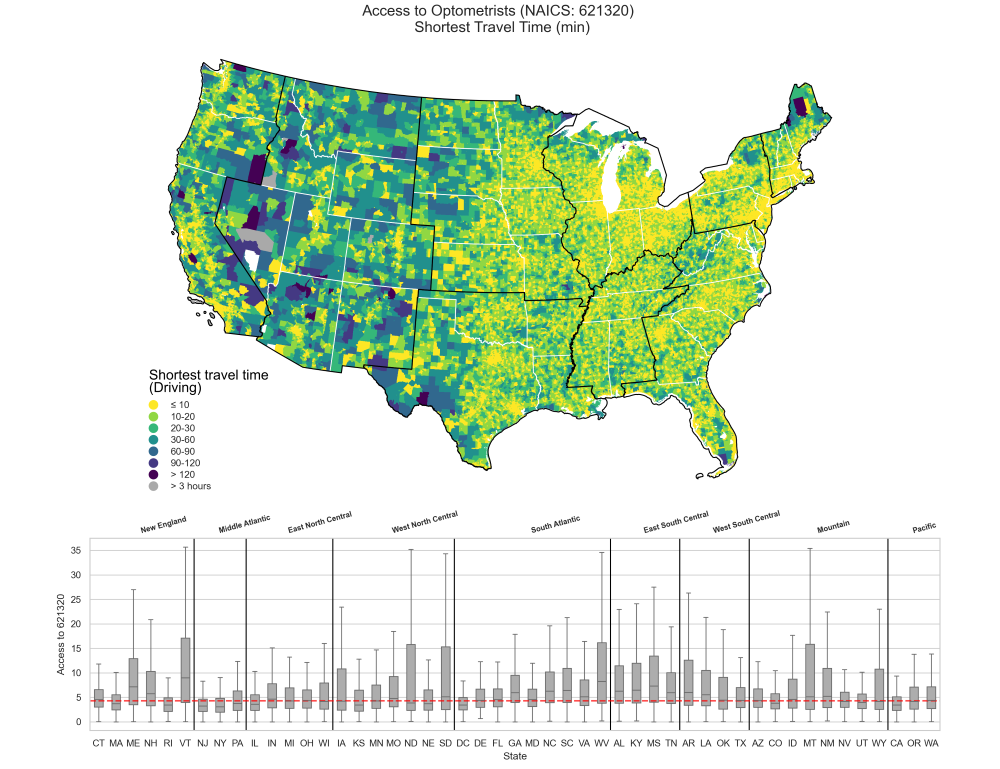
Another way that Drs. DeJohn and Kim ensured applicability to all Americans is through their inclusion of Hawaii and Alaska in the dataset. Because healthcare access research typically relies on road network analysis, these states are often excluded. Many Alaskans, for example, travel by boat or plane. Drs. DeJohn and Kim were able to account for these alternative modes of transport in their calculations.
The GECC will release their new accessibility measure to the public later this year, alongside intermediary matrices containing travel time from each small geographic area (they used census block groups) to each of the 13 facility types. These matrices will enable assessments of access by comparing the number and distribution of facilities within a given area. Soon, exposomics researchers will be able to link this healthcare access data to longitudinal cohort data, even if tagged to different geographical units (like counties), thanks to guidance from the cross-domain spatial aggregation group.
Dr. DeJohn views her work as a service to the scholarly community and she is grateful to the GECC Pilot Project for providing her with protected time to do this work. The GECC, in turn, is grateful to her and Dr. Kim: their new accessibility metric and the accompanying dataset matrices will facilitate important research about healthcare access and its role in healthy aging. Kudos!


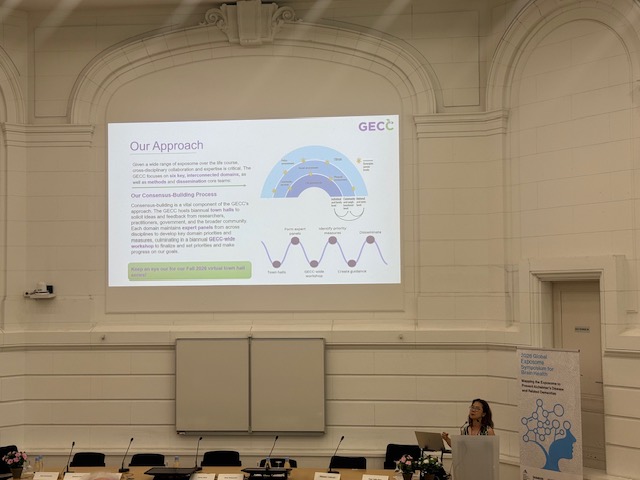
Dr. Amber Dejohn (left) and Dr. Kyusik Kim (right).
P.S. Stay tuned for future announcements about the pilot project grantees for 2026-2027.
This article was featured in our GECC summer 2026 newsletter. To view the full newsletter, click here.
After a review process, the Gateway Exposome Coordinating Center selected five pilot projects from a pool of 63 applications to receive funding this cycle. The selected projects include:
The National Institute of Aging (NIA) recently published a “2025 NIH Alzheimer’s Disease and Related Dementias Research Progress Report: Advances and Achievements,” featuring the Gateway Exposome Coordinating Center (GECC).
The report spotlights GECC's work fostering collaboration and accelerating life course research on the social, behavioral, psychological, and economic exposures that shape Alzheimer’s and related dementias outcomes. It highlights the Center’s interdisciplinary work and its efforts to produce accessible, quality data for AD/ADRD researchers.
To read the full mention of the GECC, you can
access the full report on the NIA’s website and navigate to the “Spotlight: Social determinants of health and the exposome” section.
Alzheimer's & Dementia and the Gateway Exposome Coordinating Center (GECC) invite submissions for a special issue dedicated to interdisciplinary research on the exposome and Alzheimer's Disease (AD) and AD-Related Dementias (ADRD) risk, resilience, and disparities. This special issue will include research articles, short reports, review articles, and policy forums on the emergent, growing field of exposomics, focusing on how an expansive conceptualization of the exposome — the various environmental exposures over the life course — influence brain health and dementia outcomes.
Submissions are encouraged to explore sources of risk including, but not limited to, the physical, chemical, natural, social, political, and economic dimensions of the exposome and their interplay with each other. Papers in the special issue will advance and complement the GECC’s mission of facilitating collaboration and consensus-building across disciplines, and serving as a hub for interdisciplinary exposome research, deepening our understanding of risk and resilience for AD/ADRD.
Submissions open July 1, 2025. The submission deadline is March 31, 2026. All papers will undergo peer review and are subject to the standard author guidelines.
On March 10-13, 2025, the Gateway Exposome Coordinating Center (GECC) convened over 80 experts in Los Angeles, California to set research priorities in exposome science and its intersection with Alzheimer's Disease (AD) and AD-Related Dementias (ADRD).
The workshop’s primary goals were to identify gaps in AD/ADRD and exposome literature and, from these gaps, select priority focuses to guide the GECC’s future outputs. To address these goals, the GECC workshop leveraged interdisciplinary collaboration. Throughout the week, researchers from different domains and disciplines intermingled to discuss priorities and share methodological approaches. This structure ensured that the priorities that came out of the workshop were both informed by specialized expertise and enriched by multidisciplinary perspectives – reflecting the GECC's commitment to addressing the exposome as an integrated system rather than a collection of isolated domains.
Many of the initial gaps identified at the workshop’s outset and during subsequent discussions require innovations in how exposome data is produced and shared. To address this central focus, the workshop developed plans to maximize its reach through high-impact publication, sharing resources through open-access data platforms, and targeted engagement strategies for training and dissemination of research products.
Overall, the GECC workshop was a testament to the power of interdisciplinary collaboration, bringing together experts across aging research, social and environmental sciences, and public health to advance exposome science. The workshop laid the groundwork for a research agenda that is both ambitious and pragmatic, recognizing the complexity of exposome science while identifying concrete steps to advance the field.
In the fall of 2024, the GECC hosted a series of six town hall meetings to build consensus from experts and other stakeholders on what topics are the most important for those studying Alzheimer's Disease and related dementias (AD/ADRD) and the exposome. Bringing together nearly 300 unique participants from 130 organizations across 21 countries, these meetings yielded critical insights that will guide the GECC’s efforts over the next five years. These insights will inform priority research areas for the GECC to create new resources and tools for researchers studying the exposome and its impact on brain health.
Hosted virtually on Zoom, participants began by suggesting key factors that may influence our communities’ risk of, resilience to, and disparities in Alzheimer’s and dementia. Breakout sessions then formed around these topics for participants to have focused discussions.
There were many shared themes across the town halls that were salient to all GECC domains. Three of the most resounding, overarching themes were (1) interdisciplinary collaboration, (2) innovative methodologies, and (3) development of novel measures. In addition to these shared takeaways, each domain identified key areas of focus for their future research.
Collaborative notes were taken, and made publically available for download, to ensure that these discussions will help guide participants and the GECC to set priorities for future scientific research and policies related to brain health.
The GECC will host another round of town hall meetings in 2027 to review progress on our initial priorities and identify new priorities that have arisen in the interim.
The GECC’s first town hall meeting on October 9th was a resounding success, bringing together 127 participants from 64 organizations across 13 countries to generate insights on the influences of brain health.
Participants discussed themes including:
Feedback from participants will directly inform the GECC’s future efforts, helping us prioritize research areas, create new resources, and develop tools that will benefit the broader community.
To engage with the GECC’s future activity be sure to:
Register for our future town hallsThe ambitious project will study influences on dementia risk and resilience as varied as pollution, education and policy.
Backed by a $25 million, five-year federal grant from the National Institute on Aging, USC’s Center for Economic and Social Research (CESR) is launching an ambitious investigation into the complex matrix of factors that feed into developing — or being protected from — Alzheimer’s and other related forms of dementia.
This matrix, or “exposome,” refers to all environmental exposures and corresponding biological responses experienced by an individual throughout his or her life.
Exposome research examines risk and resilience influences as varied as pollution, education or policy, with the goal of understanding how resulting biological changes may lead to disease. For example, previous research at USC has shown that exposure to fine-particle pollution, or PM2.5, leads to Alzheimer’s-like brain changes in humans. Other research shows how education may improve the brain’s ability to withstand damage that leads to dementia.
Understanding Alzheimer’s “exposome” is “increasingly urgent”
“Understanding how these exposures impact health and contribute to Alzheimer’s disease is increasingly urgent as the global population ages,” said principal investigator Jinkook Lee, director of the program on global aging, health and policy at CESR. CESR is based at the USC Dornsife College of Letters, Arts and Sciences.
Lee’s project, known as the Gateway Exposome Coordinating Center (GECC), will spearhead development of enhanced data and collaboration across disciplines to identify which aspects of the exposome affect dementia risk and how these can be mitigated.
“This center is an excellent exemplar that interconnects several of USC’s ‘moonshots’ — from health and computing to sustainability. This center further expands on other efforts of this team on the global stage such as the Longitudinal Aging Study in India, another USC priority,” said Shrikanth “Shri” Narayanan, vice president for presidential initiatives at USC.
“Efforts such as Lee’s exposome project have positioned USC at the top of U.S. universities in National Institutes of Health neuroscience awards,” said Ishwar K. Puri, senior vice president of USC’s Office of Research and Innovation. “With cutting-edge international collaborations and four prominent research centers, we believe we can get out in front of Alzheimer’s and prevent or stall the disease.”
The GECC’s efforts will bring together leading researchers from USC and other institutions, alongside key government agencies such as the Department of Health and Human Services, the National Institutes of Health and the Environmental Protection Agency. This interdisciplinary collaboration is crucial for identifying priority areas and shaping future research in the field, Lee said.
“Collaboration is a cornerstone of the GECC,” said David Knapp, a senior economist at CESR who is co-leading the project with Lee and Sara Adar from the University of Michigan. “We are fostering consensus-building among researchers and stakeholders from diverse fields, ensuring a broad, inclusive approach to understanding the exposome’s role in dementia.”
Expanding long-running data project
The GECC project is an expansion of the Gateway to Global Aging Data, a long-running project with $24.7 million federal grant from the National Institute on Aging. The Gateway to Global Aging Data is a public resource for longitudinal and cross-national studies on aging over 42 countries around the world, offering data, information and tools to stimulate global aging research.
The GECC project joins another recently launched, large-scale collaboration on Alzheimer’s and dementia that is also anchored at USC.
Julie Zissimopoulos, a professor at the USC Price School of Public Policy and the USC Schaeffer Center for Health Policy & Economics, is leading an effort to build a dementia cost model that will generate comprehensive national, annual estimates of the cost of dementia. The project, funded by an $8.2 million grant from the National Institute on Aging, could benefit patients and their families.
To contact us, email us at: contact@gatewayexposome.org
The GECC is funded by the National Institute on Aging (NIA) U24AG088894.